






































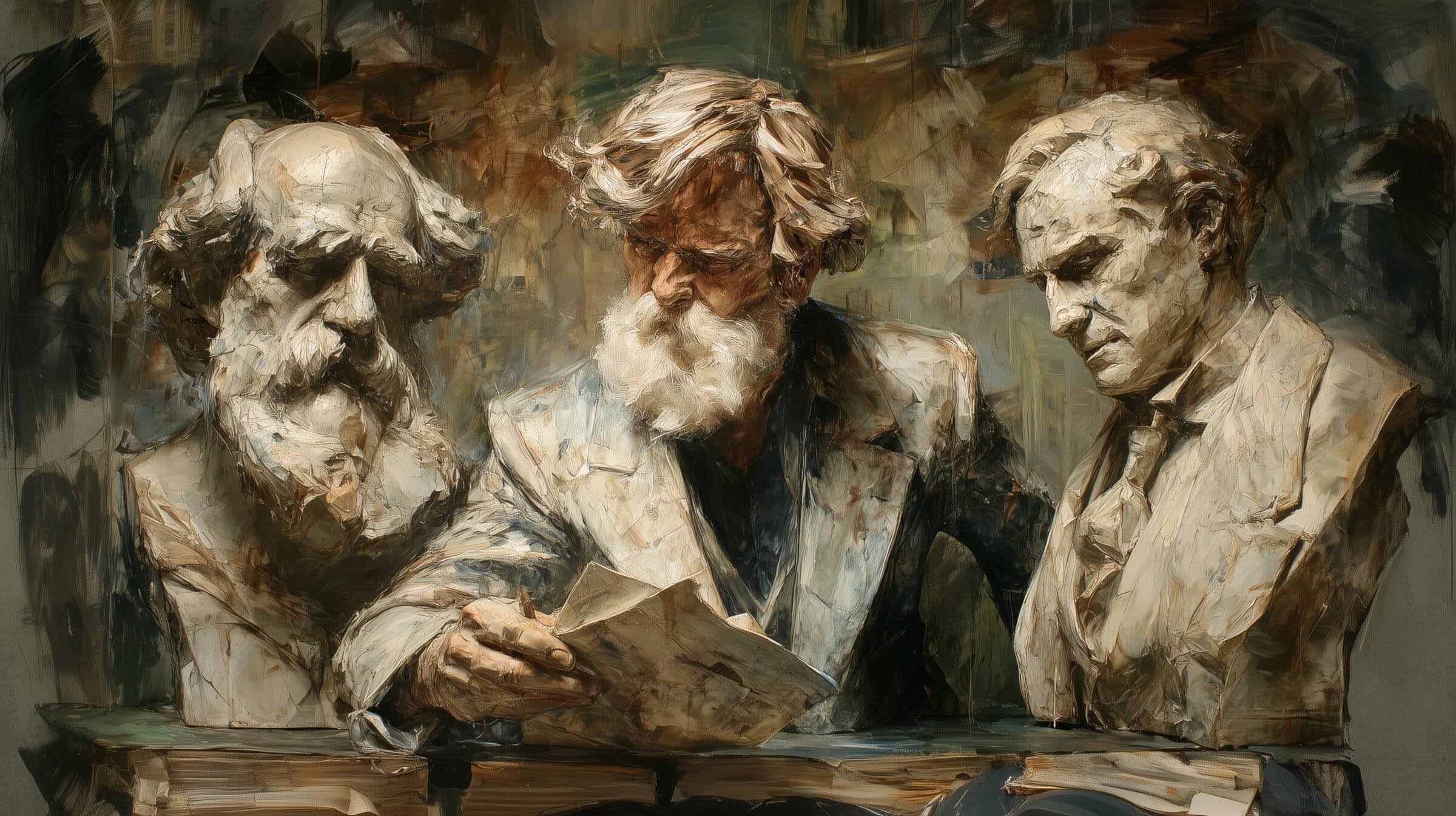
Wesley Smith points out the simultaneously vapid and dangerous musings of Rice University scholar Cary Wolfe on “posthumanism.” That is the idea that we can and should progress beyond the ancient understanding that something fundamental separates human beings from other creatures and from the rest of nature.
Where does posthumanism come from? Wolfe is admirably frank about its “genealogy”:
There is, in fact, a genealogy of posthumanist thought that stretches back well before the 21st or even 20th century. You find hints of it in anything that fundamentally decenters the human in relation to the world in which we find ourselves, whether we’re talking about other forms of life, the environment, technology or something else. Perhaps more importantly, you find it in the realization that when you don’t allow the concept of the “human” to do your heavy philosophical lifting, you are forced to come up with much more robust and complex accounts of whatever it is you’re talking about. And that includes, first and foremost, a more considered concept of the “human” itself.
…
Darwinian thought was a huge step in this direction. So was Marx’s historical materialism or the Freud of “Civilization and Its Discontents.” [Emphasis added.]
Darwin, Marx, and Freud — the trio who did so much to give us modern culture with its deformities. Exactly how posthumanism cashes out in contemporary cultural terms is the subject of a detailed study with new polling data by John G. West, “Darwin’s Corrosive Idea: The Impact of Evolution on Attitudes about Faith, Ethics, and Human Uniqueness.” Download it now.