





































The question on which the evolution debate turns is whether biological information is a naturally occurring phenomenon, like lightning or salt crystals, or whether, like books or hieroglyphic inscriptions, it requires an author. But what is information? Eric Holloway answers succinctly:
The answer is staring us right in the face. Let’s look at the word “information” and break it into pieces: in-form-ation. The word is itself telling us the nature of information. It is saying that a thing is informative when it has been formed.
What does it mean to be formed? Let’s think about things that are formed. We can form a lump of clay. We can carve a piece of wood, giving it form. We can cut a piece of paper into a form. In each of these cases, we take raw matter and shape it according to an external pattern. This must be what information means: a raw medium has been shaped by an external pattern.
Let us return to our original two sets of informative and uninformative things and apply our criterion. Consider this article, an information piece that appears in a medium. The raw matter of an article is letters and punctuation. If we distribute letters and punctuation randomly on a page, without applying an external pattern, then we get something that is without pattern and uninformative. On the other hand, if we take our letters and punctuation, and arrange them so as to express our thoughts (an external, specified pattern), suddenly the arrangement becomes informative to a reader. It looks as though our criterion works.
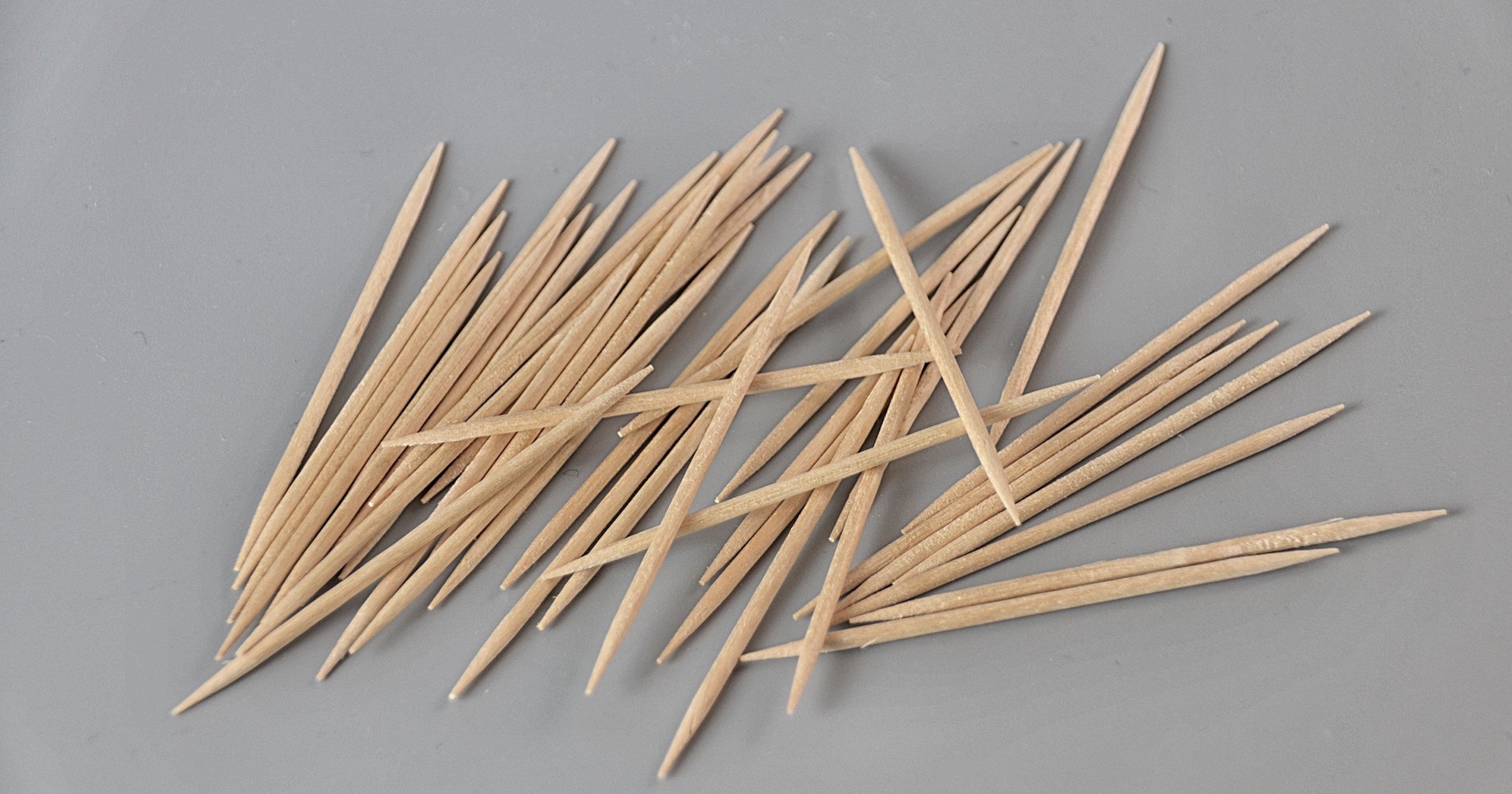
Let’s try again. Consider the toothpicks. If we drop them on the ground and let them scatter randomly, they will have no shape and will thus be uninformative. On the other hand, we can carefully place the toothpicks to spell out a message, which is an external, specified pattern, and then the toothpicks become informative. Success again!
So we can now begin to understand what information is. When we have some sort of raw material which is arranged according to an external pattern, we can produce information.
Read the rest at Mind Matters. When Darwinists seek to mislead with insinuations that the controversy about intelligent design is about the Bible, the reply is simple. No, the controversy is about information.