





































Thomas Jefferson

Rights Are Not about “Feelings”
At the Foundations of Science: Respect and Seeking to Understand
We Hold These Truths to Be Self-Evident
Fordham Institute and Discovery Institute Agree: Texas High School Evolution Standards Are Good for Students

Try to Imagine Our Country’s Founding if the Founders Had Not Been Advocates of Intelligent Design
Thomas Jefferson: Intelligent Design Not Based on Religion
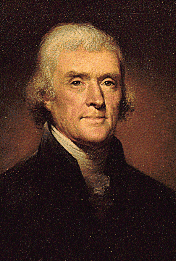
Next time someone tells you intelligent design is “based on religion,” you might point him to American Founder Thomas Jefferson, author of the Declaration of Independence. As I explain in a special July 4th edition of ID the Future, Jefferson not only believed in intelligent design, he insisted it was based on the plain evidence of nature, not religion.
Ironically, the critics of intelligent design often think they are defending the principles of Jefferson. The National Council for the Social Studies, for example, claims that intelligent design is religion and then cites Jefferson’s famous Letter to the Danbury Baptists calling for a “wall of separation” between church and state. The clear implication is that Thomas Jefferson would agree with them that intelligent design is religion. A writer for Irregular Times goes even further, insisting that “the case of Thomas Jefferson makes it quite clear that there was not a consensus of support among the authors of the Constitution to allow for the mixing of religion and government to support theological doctrines such as intelligent design.”
Read More ›