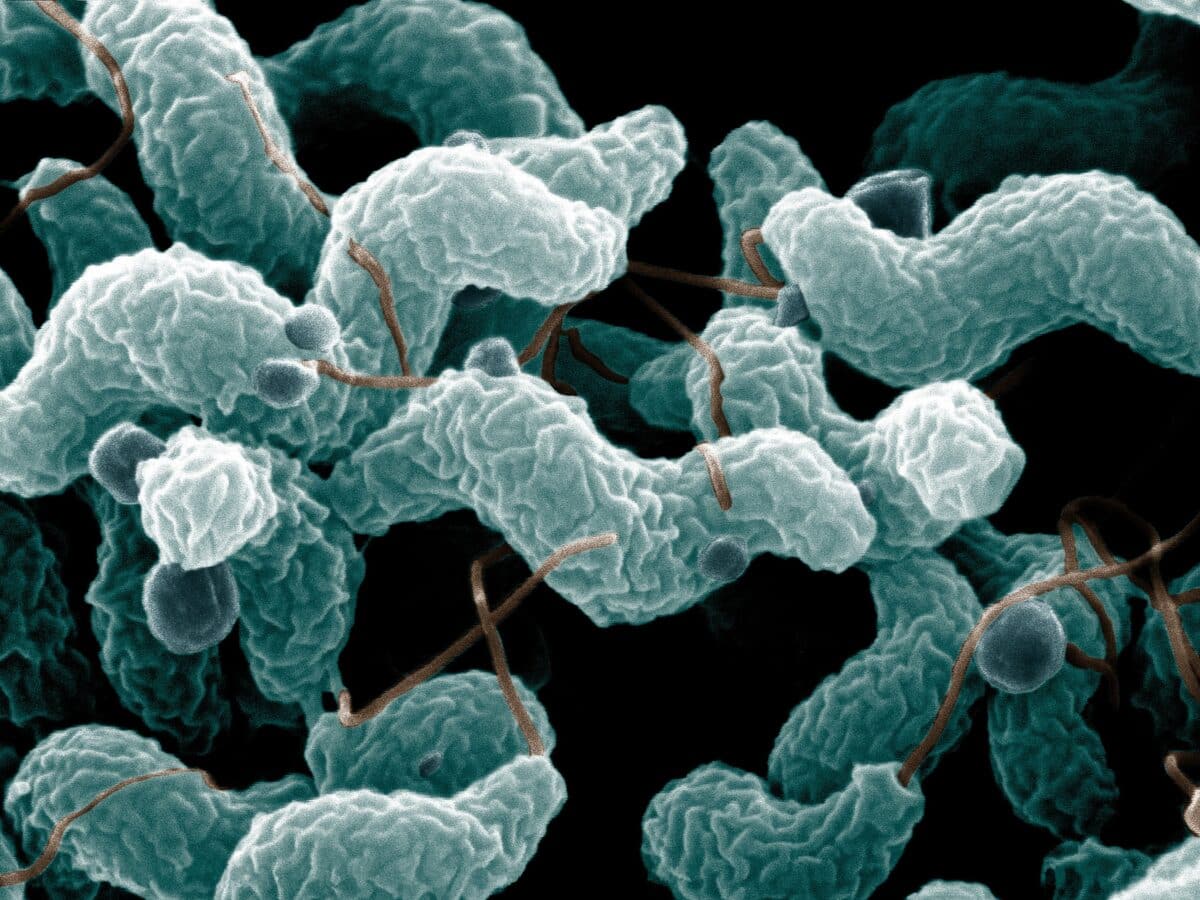
ARSCampylobacterjejuni Type post Author Jonathan McLatchie Date July 17, 2025 CategoriesBiologyEvolutionIntelligent DesignScience Reporting Tagged , assembly, bacteria, basal disk, Campylobacter jejuni, domain swapping, evolution, fact check, flagellar system, flagellum, folding, headlines, Imperial College London, intelligent design, mathematical plausibility, microbiology, Morgan Beeby, PflC proteins, propellers, proteases, proteins, swimming, transitions, undirected processes Fact Check: Has a Study Shown “How Bacteria Evolved Powered-Up Propellers”? Jonathan McLatchie July 17, 2025 Biology, Evolution, Intelligent Design, Science Reporting 6 This is a classic case of the media overstating the evidence for some evolutionary claim. Read More ›
Type post Author Kirk Durston Date April 23, 2016 CategoriesEvolutionGeneticsMathematics Tagged , __tedited, bacteria, calculations, constraints, creative power, diversification, gene sequences, genetic drift, genome, infinity, junk DNA, mathematical plausibility, mathematics, mutation rate, natural selection, novel function, population size, probabilities, protein folding, protein sequences, rigor, search capability, stable forms, testability Calculating the Maximum Number of Trials Evolution Could Have Performed Kirk Durston April 23, 2016 Evolution, Genetics, Mathematics 4 Countless people use the following rationale to justify saying there was no need for an intelligent designer behind life. Read More ›