































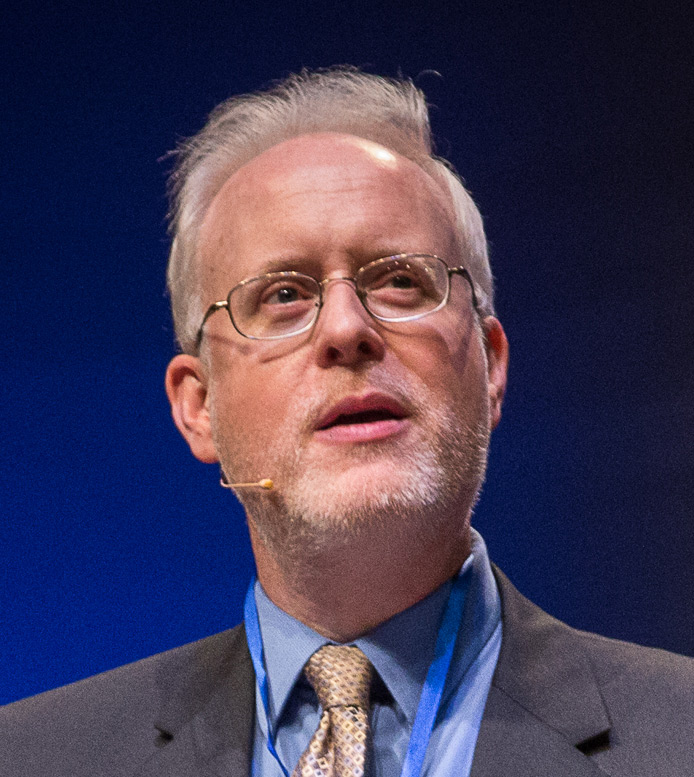



What makes us happy — and who or what is equipped to answer such a profound question? Should the answer come from religion? Philosophy? Neuroscience?
In a recent conversation on the Huberman Lab podcast, neuroscientist Andrew Huberman and social scientist Arthur Brooks drew on all three. Their discussion of “The Art of True Happiness” raises fascinating questions: Does human happiness reflect something about how we are designed? Do the things that fulfill us reveal something about our origins?
The essence of what Brooks has to say is that humans experience happiness when their lives are in alignment with what they were designed to do both as human beings and as individuals. In his telling, enjoyment, satisfaction, and meaning are three “macronutrients” that the brain, body, and soul need to experience happiness.
Enjoyment and Human Exceptionalism
In an expression of our neurobiological uniqueness, humans experience true enjoyment when pleasure is guided by moral aspiration. Mere pleasure, of course, can arise from other sources: like rewarding an immediate impulse. However, enjoyment is something different: it requires that pleasure occur in a relationship with other people or with transcendence.
Brooks explains how humans are neurologically unique. Our prefrontal cortex is much bigger than its equivalent in other mammals. That enables us to exercise true choice:
We have this choice, this incredible prefrontal cortex, this human cortex that’s enormous. Your dogs’ is wafer thin. Ours is like 30 percent of the weight of our brain and what that supercomputer allows us to do is choose between animal impulses and moral aspirations. […] When we convert pleasure into enjoyment, it’s because it takes on a moral aspiration to it. We take our pleasures and we add people and memory, thereby kind of delivering them to an executive experience that we’re managing. […] It’s quintessentially human.
This aspect of our anatomy — that the human brain has regions designed to choose between animal impulse and moral aspiration — grants us a uniquely human capacity: to participate in enjoyment. This implies that there are physical and metaphysical aspects to human agents that enable our uniquely human properties.
From an intelligent design perspective, this is significant: in the animal kingdom, human beings have a uniquely designed brain that can envision possibilities and deliberately choose one outcome over another. Our happiness appears to be connected to how we exercise those capacities. Put another way, our brain is designed to make us feel happy when we’ve made choices in alignment with our moral aspirations.
Yet, needless to say, our ability to choose behavior aligned with moral aspiration does not mean we always make the right choice. Brooks discusses leisure and asks what we seek when no one is telling us how to spend our time. He names four possible “idols” — money, power, pleasure, and honor — and invites Huberman to consider which one has the strongest pull on him.
Huberman eliminates the possibilities one by one until he identifies power as his “idol.” It is an uncomfortable, vulnerable answer to give in private, and all the more so before this audience. Brooks refocuses the conversation on action: recognizing what draws us in gives us a chance to notice when it begins to govern our choices.
The dangerous thing about an idol is that it delivers pleasure, whose pursuit can lead to addictions. Yet because we actually need enjoyment, not just pleasure, it must fall short in the end. As Brooks explains, the idols “promised satisfaction. They don’t deliver. They won’t deliver the satisfaction that you seek, but your brain tells you that they will.”
Part of your brain tells you that these idols will please you, yet there is a different part, perhaps not even a physical one, that won’t be made happy that way. We can therefore want something intensely without finding the happiness we expected when we obtain it. Recognizing this gap gives us an opportunity to reconsider what deserves our attention.
Satisfaction from Suffering, Not from Accolades
The second macronutrient, satisfaction, introduces another apparent paradox: happiness often requires struggle.
Brooks defines satisfaction as “joy that you get from an accomplishment after struggle.” Brooks and Huberman discuss how part of your brain, the parahippocampal gyrus, helps you remember the context and details of what you achieved. It prompts us to consider how satisfaction comes only after a struggle. Satisfaction is proportionate to the struggle!
As Brooks puts it, “Real satisfaction from your accomplishments comes from the struggle, not from the accolades. That’s what it really comes to, because you earned it, and human beings are made to earn their success.”
Our mind, our brain, our physical as well as our metaphysical existence are all designed to deliver satisfaction only after our suffering toward a goal. Struggle toward a goal calls on capacities we associate with human agency: foresight, planning, persistence, and the ability to direct our actions toward something we cannot yet see.
This says something about the origin and design of the brain itself. For example, if humans evolved by Darwinian evolution, then why are our brains not made happy by rape (making lots of offspring), or by sheer survival of the fittest (destruction of genetically susceptible individuals)? Why instead is the brain satisfied by struggle that produces virtue?
Intelligent design (ID) theory holds that certain features of nature, such as the human brain, are best explained by intelligent agency. Just as coding Microsoft Word or building the Huberman Lab podcast requires foresight, planning, and persistence, ID argues that biological systems bear the signature of being designed by an intelligent agent.
But Huberman is curious about a more personal question: How does satisfaction come to us as individuals? How do I know I’ve found my calling? Brooks’s answer begins by looking past the scoreboards — for example, an academic’s h-index or publication list (a quick check of Huberman’s Wikipedia page tell us his stats are, respectively, “46 with over 14,742 citations”). Such measures are commonly cited, but neither can tell anything about the scholar’s career satisfaction.
What makes us truly happy provides clues about the purpose for which we were designed. We find satisfaction when we create, bringing something worthwhile into being that is in alignment with moral aspiration.
But what is truly worthwhile, and how is moral aspiration defined? Brooks calls that an ungooglable question: seeking to answer it is a highly complex endeavor, managed primarily by the right hemisphere of the brain. He says, “You can train a gorilla to answer all kinds of questions, but not [to] ask interesting fundamental questions. That’s humanity. That’s god-like to ask questions.”
He suggests that what Huberman is doing with the Huberman Lab podcast is part of his God-given calling. Huberman agrees: “I feel like that’s what God wants for all of us” — not to have podcast necessarily but to pursue a genuine calling to excellence, in a way that only humans do: “I feel like that’s why we are here.”
Search for Meaning Drives Us Toward the Divine
Finally, Brooks turns to meaning and the enduring presence of religious belief across human societies: “Anthropologically there is not any evidence of societies that are systematically secular. On the contrary, all human societies that we’ve been able to [study] have a sense of the divine.”
“This is not proof of God,” he says, “but it is evidence of something.” He offers an analogy: thirst points to water, and sexual desire points to sex. What might our persistent longing for the divine suggest?
How and why does this insatiable longing — with the intuition that there is something more — arise? The human mind is wired to find happiness only in the context of enjoyment, satisfaction, and meaning, all of which are rooted in moral aspiration toward the purpose we are designed to fulfill.
The suggestion of an intelligent design behind all this is fascinating. Our neurochemistry isn’t made happy without worship, prayer, love, and even suffering. Through relationships with people and with the Creator we bring happiness to our lives. We were created with a brain that pushes us toward deep, hard relationships with one another, and that drives us toward the Creator.
A Personal Journey
Huberman describes his own personal journey toward faith as an insatiable striving for perfection. He observes, “Perfection might be the goal, but no one attains that. No human attains that.” This aspiration towards perfection, with which some of us are so familiar, can’t be attained by what we ask other people to do. Neither can human expertise alone help us get there.
Huberman says it was this recognition that helped open him to belief in God and to a consistent practice of prayer. He encourages us: “If one just entertains the possibility that humans don’t have all the answers, that is like a great vista [from which] to skeptically look out.”
Huberman says that for him, faith developed gradually through exploration, uncertainty, and an increasing willingness to look beyond what he already understood: “Faith is allowed to be gradual. It’s okay to be skeptical, to move forward, to move back, to explore, to wonder, because that’s all the stuff of being, of having a human brain. And God probably wants that for us.”
This is consistent with my own experience. We can bring our questions into our relationship with the divine, acting on present faith, and trusting that understanding may unfold over time.
We are unsatisfied by scoreboards: meaning comes not from h-indexes or dopamine hits, but through a relationship with God, driving us toward greater moral aspiration (who you want to see yourself becoming) and fulfilling our individual calling.
The longing for meaning reflects our design itself. If humans evolved by Darwinian evolution, why is our happiness not simply tuned to maximize our ability to survive and leave offspring? Sure, children do bring us great happiness, but are people without children destined for unhappiness?
There other ungooglable questions, says Brooks, like: Why am I alive? What should I do with the life I have been given? For me, the answers to those questions are found in communion with God and with others, in exploring creation, and in creating in ways that reflect my moral aspirations. It seems the one who designed my mind in the first place also intriguingly built it so I would feel most happy when I’m doing what He wants me to do.