






































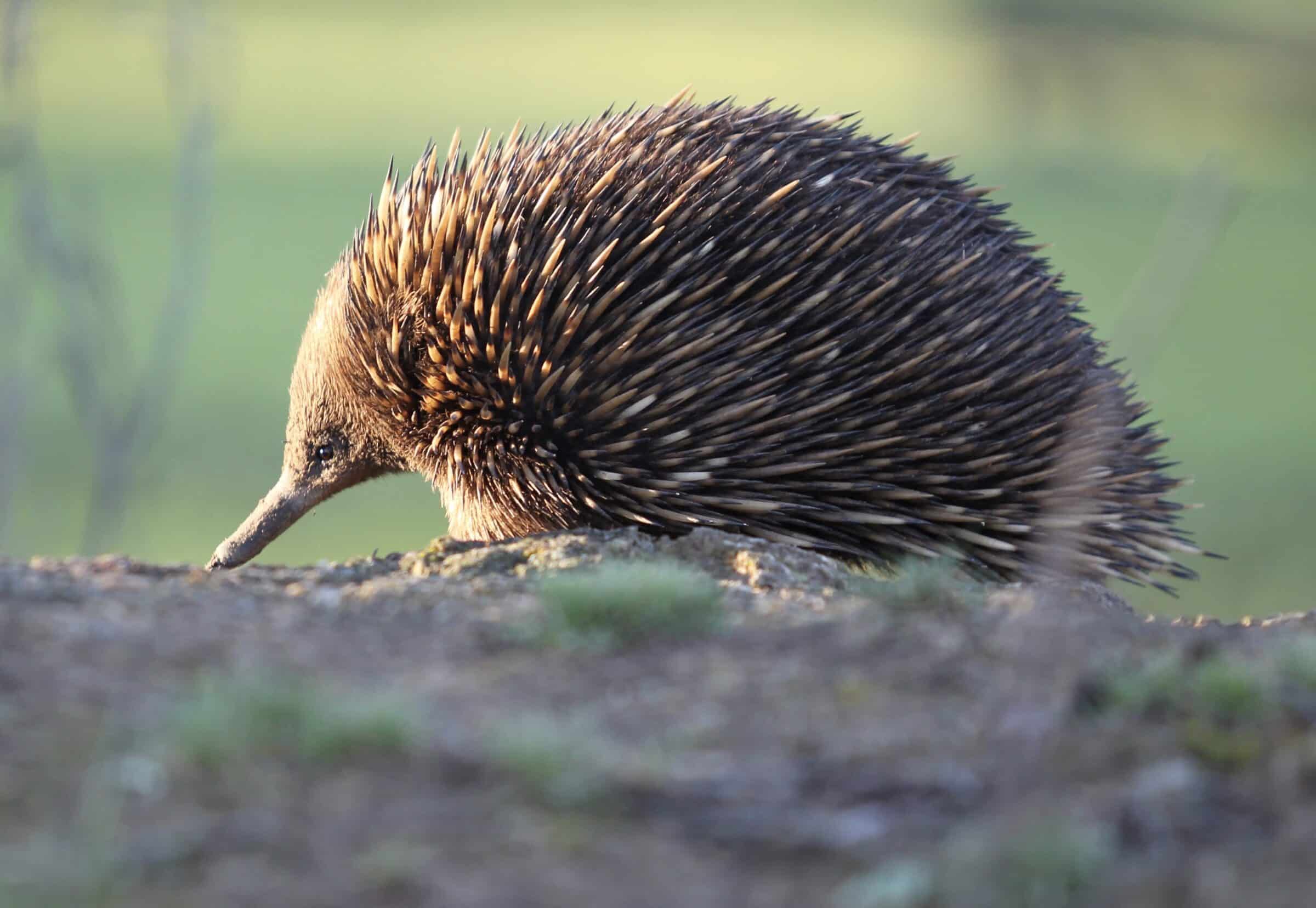
Author’s note: Please find below the Abstract from my new paper, “From Echidna and Platypus to the Entire Australian Marsupial Fossil Record of 2026 as Compared with 1993.” See the paper itself at the link for all citations, illustrations, and figures.
Abstract
As is also true for the plant and animal fossil record around the globe, virtually all the animals addressed and discussed here — echidnas, platypuses, and the entire Australian marsupial order — appear abruptly in the geological record. That appearance is followed by a remarkable constancy (stasis) of their typical characteristics, i.e., their fundamental structural body plans, their blueprints or Bauplans, over vast periods of time. This evidence together constitutes another piece of the overall mosaic of facts in utmost contrast and contradiction to neo-Darwinian predictions and expectations of continuous evolution over thousands upon thousands of transitional links.
Moreover, the paleontological facts, as found and described, refute once and for all the false claim of Darwin and his disciples down to this very day of “the extreme imperfection of the geological record.” Thus, a rich fossil record, an “extreme perfection” distinguished by abrupt appearances and stasis, would be, as Darwin himself confessed, the “most obvious and gravest objection which can be urged against my theory.”
Now, the fact is that all 95 families cited in the following documentation appear abruptly, instantaneously, without evolutionary delay over many transitional links in the fossil record. They either “persist for some millions of years virtually unchanged, only to disappear abruptly — the ‘punctuated equilibrium’ pattern of Eldredge and Gould,” as Tom S. Kemp put it, or they persist to the present as shown here for many families of the Australian marsupials.
In the present article, the most important result is this: All extant Australian marsupial families are also known from the fossil record. So, instead of an “extreme imperfection of the geological record” we find a complete geological record — 100 percent complete! — for all the living Australian marsupial families. Adding the number of the extinct families, the figure is raised to 166 percent. Please see the details below.
These results are extrapolated for the orders Prototheria, Triconodonta, Multituberculata, Symmetrodonta, and Cladotheria — which (except the Prototheria) are known exclusively from the fossil record. From this, as a very well-educated guess, I estimate that the families of these orders also have a fossil record of, say, around 90 percent (or more). Yet several more families will probably be discovered in the future.